Science
Which sea slug photosynthesizes with stolen chloroplasts?
- Elysia chlorotica
- The blue dragon
- The sea hare
The answer is Elysia chlorotica. The solar-powered slug.
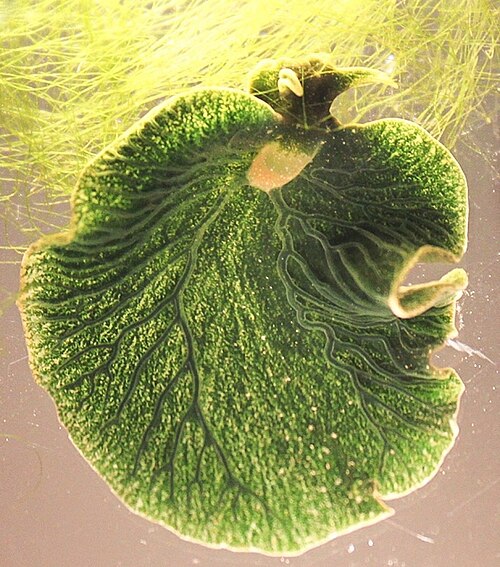
Elysia chlorotica is a sea slug from the salt marshes of the American east coast that eats a filamentous alga, punctures its cells, and swallows the contents - but does not digest the chloroplasts. It keeps them, tucked into the cells lining an elaborately branched gut, where they go on photosynthesising. The animal turns bright green and grows into the shape of a leaf, which is not a coincidence so much as good sense.
The trick is that this should not work for long. A chloroplast is not self-sufficient; most of the proteins it needs to keep running are encoded in the algal cell's nucleus, and the slug has not stolen the nucleus. Cut off from it, the plastids ought to fail within days. In Elysia they keep going for the better part of a year, and a well-fed adult can be starved for months and survive on light.
It is not the only animal doing this - several other sacoglossan slugs retain plastids, and corals and giant clams run photosynthetic partners of their own. What sets Elysia apart is that it keeps the machinery rather than the organism: no algal cell survives in the slug, only the stolen equipment, running on borrowed time.