History
Which Mughal emperor wrote the memoir Baburnama?
- Babur
- Humayun
- Jahangir
The answer is Babur. Founder of the dynasty.
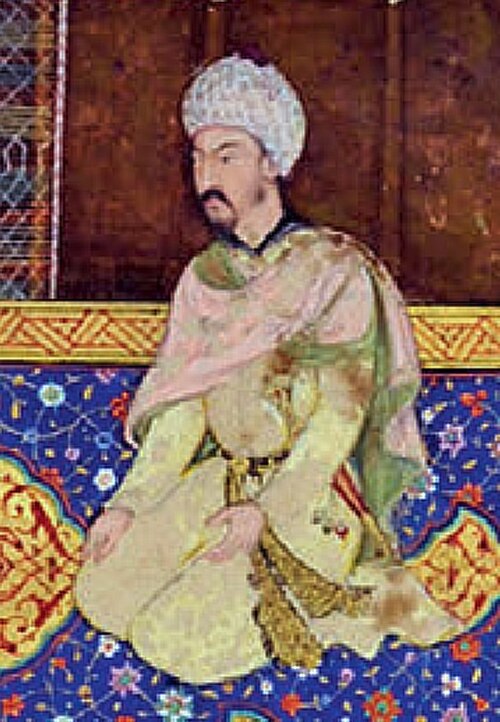
Babur had Timur on his father's side and Genghis Khan on his mother's, which in Central Asia in 1500 was the best possible pedigree and no guarantee of anything. He inherited a small kingdom in the Ferghana valley at eleven, took Samarkand three times and lost it three times, and ended up in Kabul because there was nowhere else left to go. From there he turned south, won at Panipat in 1526 against a far larger army by using field artillery and a flanking manoeuvre his opponents had not met, and founded the empire that ruled India for three hundred years.
The Baburnama is his own account of it, written in Chagatai Turkic rather than the Persian of his court, and it is unlike anything else from its time and place. He records his defeats in detail. He describes his own drinking, and the year he gave it up, and how much he missed it. He is frank about a first marriage he found excruciating and about periods of what reads plainly as depression.
He is also, unexpectedly, a naturalist. Long stretches of the book abandon politics entirely to catalogue the birds, flowers and fruit of every place he passes through, with comparative notes on melons - he thought India had no decent ones and the loss clearly bothered him more than several military reverses. He designed gardens everywhere he settled, and asked to be buried in one in Kabul rather than in a monument in India.
It is usually called the first true autobiography in Islamic literature, and the claim is fair. His grandson Akbar had it translated into Persian so the court could read it; the reason it still works is that Babur seems to have been writing to find out what he thought rather than to be admired.