History
Which kingdom's Queen Nzinga resisted Portuguese colonization?
- Ndongo and Matamba
- Kongo
- Dahomey
The answer is Ndongo and Matamba. Ndongo-Matamba, in modern Angola.
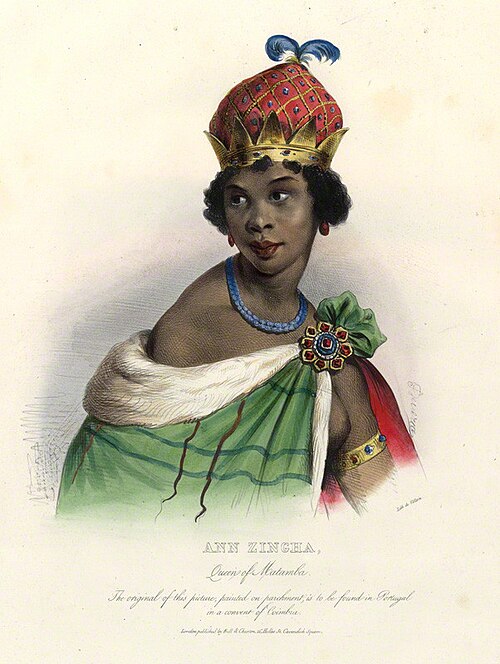
Nzinga Mbande ruled Ndongo and then Matamba, in what is now Angola, and spent some forty years making Portuguese expansion into the interior expensive. She came to power in the 1620s, when the slave trade was hollowing out the region, and she treated diplomacy, conversion and war as instruments to be picked up and put down as required.
The story everyone tells comes from a negotiation in Luanda in 1622. The Portuguese governor had a chair; Nzinga was offered a mat on the floor, which would have placed her as a subordinate rather than a sovereign. She had one of her attendants kneel, sat on their back, and conducted the meeting at eye level. It is the kind of anecdote that survives because it is a precise piece of political theatre.
The rest was harder. She was baptised Ana de Sousa when it served her, allied with the Dutch when they seized Luanda in 1641, and when the Portuguese drove the Dutch out in 1648 she withdrew to Matamba and built it into a trading power strong enough that Lisbon eventually preferred to deal with it than fight it. She died in 1663, about eighty years old, and is now one of the founding figures of Angolan national memory.