The Garden of Learning

History

Wars and empires, monarchs and revolutions — the events and figures that pressed their shape upon the centuries.

87 questions · tap a question to reveal the answer

Which animal is the king of the jungle?
Lion — by reputation at least.
Lion

The lion is a large cat of the genus Panthera, currently ranging only in Sub-Saharan Africa and India. It has a muscular, broad-chested body; a short, rounded head; round ears; and a dark, hairy tuft at the tip of its tail. It is sexually dimorphic; adult male lions are larger than females and have a prominent mane that extends from the…

Wikipedia · Lion
Which famous nurse was called the Lady with the Lamp?
Florence Nightingale — in the Crimean War.
Florence Nightingale

Florence Nightingale was an English social reformer, statistician and the founder of modern nursing. Nightingale came to prominence while serving as a manager and trainer of nurses during the Crimean War, in which she organised care for wounded soldiers at Constantinople. She significantly reduced death rates by improving hygiene and…

Wikipedia · Florence Nightingale
Which ancient civilization built Machu Picchu?
The Inca — high in the Peruvian Andes.
Inca Empire

The Inca Empire, officially known as the Realm of the Four Parts, was the largest empire in pre-Columbian America. The administrative, political, and military center of the empire was in the city of Cusco. The Inca civilisation rose from the Peruvian highlands sometime in the early 13th century. The Portuguese explorer Aleixo Garcia was…

Wikipedia · Inca Empire
Who was the first President of the United States?
George Washington — from 1789.
George Washington

George Washington was a Founding Father and the first president of the United States, serving from 1789 to 1797. As commander of the Continental Army, Washington led Patriot forces to victory in the American Revolutionary War against the British Empire. He is commonly known as the Father of His Country for his role in bringing about American independence.

Wikipedia · George Washington
Which empire built the Colosseum?
The Roman Empire
Roman Empire

The Roman Empire was a state that dominated the Mediterranean and much of Europe, Western Asia, and North Africa during the classical period. The Roman Republic had previously conquered most of these territories, which later came under permanent single-person rule following Octavian's rise to power and the establishment of the Augustan…

Wikipedia · Roman Empire
Who discovered penicillin?
Alexander Fleming — in 1928.
Alexander Fleming

Sir Alexander Fleming was a Scottish physician and microbiologist. He shared the 1945 Nobel Prize in Physiology or Medicine with Howard Florey and Ernst Chain "for the discovery of penicillin and its curative effect in various infectious diseases". This was the first antibiotic substance discovered. His discovery in 1928 of what was…

Wikipedia · Alexander Fleming
Which king had a round table?
King Arthur — in legend.
King Arthur

King Arthur was a legendary king of Britain. He is a folk hero and a central figure in the medieval literary tradition known as the Matter of Britain.

Wikipedia · King Arthur
Who was the Egyptian queen who allied with Julius Caesar?
Cleopatra — VII.
Cleopatra

Cleopatra VII Thea Philopator was Queen of the Ptolemaic Kingdom of Egypt from 51 to 30 BC, and the last active Hellenistic pharaoh. A member of the Ptolemaic dynasty, she was a descendant of its founder Ptolemy I Soter, a Macedonian Greek general and companion of Alexander the Great. Her first language was Koine Greek, and she is the…

Wikipedia · Cleopatra
Which battle in 1066 changed English history?
Hastings — The Battle of Hastings — the Norman conquest.
Hastings

Hastings is a seaside town and borough in East Sussex on the south coast of England, 24 mi (39 km) east of Lewes and 53 mi (85 km) south east of London. The town gives its name to the Battle of Hastings, which took place 8 mi (13 km) to the north-west at Senlac Hill in 1066. It later became one of the medieval Cinque Ports. In the 19th…

Wikipedia · Hastings
Which English king had six wives?
Henry VIII
Henry VIII

Henry VIII was King of England and Ireland from 22 April 1509 until his death in 1547.

Wikipedia · Henry VIII
In which decade did World War I begin?
1910s — it began in 1914.
1910s

The 1910s was the decade that began on January 1, 1910, and ended on December 31, 1919.

Wikipedia · 1910s
Who was the ancient Greek philosopher who taught Alexander the Great?
Aristotle
Aristotle

Aristotle was an ancient Greek philosopher and polymath. His writings span the natural sciences, philosophy, linguistics, economics, politics, psychology, and the arts. As the founder of the Peripatetic school of philosophy in the Lyceum in Athens, he began the wider Aristotelian tradition that followed, which set the groundwork for the…

Wikipedia · Aristotle
Which battle ended Napoleon's rule in 1815?
Waterloo — in present-day Belgium.
Battle of Waterloo

The Battle of Waterloo was fought on Sunday 18 June 1815, near Waterloo, being the last engagement with Napoleon I. The French Imperial Army under the command of Napoleon I was defeated by two armies of the Seventh Coalition. One was a British-led force with units from the United Kingdom, the Netherlands, Hanover, Brunswick, and Nassau,…

Wikipedia · Battle of Waterloo
What is the national animal of Scotland?
The unicorn — since medieval times.
Unicorn

The unicorn is a legendary creature that has been described since antiquity as a beast with a single large, pointed, spiraling horn projecting from its forehead.

Wikipedia · Unicorn
Which explorer led the first expedition to circumnavigate the globe?
Ferdinand Magellan — Magellan — his crew finished it in 1522.
Ferdinand Magellan

Ferdinand Magellan was a Portuguese explorer best known for planning and leading the 1519–1522 Spanish expedition to the East Indies. During this expedition, he became the first European to encounter the Strait of Magellan, performed the first European crossing of the Pacific Ocean, and made the first known European contact with the…

Wikipedia · Ferdinand Magellan
Who wrote the Odyssey?
Homer — in ancient Greece.
Homer

Homer was an ancient Greek poet who is widely credited as the author of the Iliad and the Odyssey, two epic poems that are foundational works of ancient Greek literature. Although his life and authorship remain obscure, Homer was revered in ancient Greek society and is considered one of the most influential authors in history.

Wikipedia · Homer
Which pharaoh's tomb was found nearly intact in 1922?
Tutankhamun — found by Howard Carter.
Tutankhamun

Tutankhamun or Tutankhamen, was the antepenultimate pharaoh of the Eighteenth Dynasty of ancient Egypt, who ruled c. 1332 – 1323 BC. Born Tutankhaten, he instituted the restoration of the traditional polytheistic form of ancient Egyptian religion, undoing a previous shift to the religion known as Atenism. Tutankhamun's reign is…

Wikipedia · Tutankhamun
Which US president appears on the one-dollar bill?
George Washington — Washington — Franklin was never president.
George Washington

George Washington was a Founding Father and the first president of the United States, serving from 1789 to 1797. As commander of the Continental Army, Washington led Patriot forces to victory in the American Revolutionary War against the British Empire. He is commonly known as the Father of His Country for his role in bringing about American independence.

Wikipedia · George Washington
Which ancient wonder was a giant statue on Rhodes?
The Colossus — of Rhodes.
Colossus (character)

Colossus is a character appearing in American comic books published by Marvel Comics. Created by writer Len Wein and artist Dave Cockrum, he first appeared in Giant-Size X-Men #1.

Wikipedia · Colossus (character)
Which queen ruled Britain for 63 years in the 1800s?
Victoria — Queen Victoria, 1837 to 1901.
Queen Victoria

Victoria was Queen of the United Kingdom of Great Britain and Ireland from 20 June 1837 until her death in 1901. Her reign of 63 years and 216 days, which was longer than those of any of her predecessors, constituted the Victorian era, a period of industrial, political, scientific, and military change within the United Kingdom marked by…

Wikipedia · Queen Victoria
What year did the French Revolution begin?
1789 — with the storming of the Bastille.
French Revolution

The French Revolution was a period of political and societal change in France that began with the Estates General of 1789 and ended with the Coup of 18 Brumaire on 9 November 1799. Many of the revolution's ideas are considered fundamental principles of liberal democracy, and its values remain central to modern French political discourse.…

Wikipedia · French Revolution
Who was the first female Prime Minister of the United Kingdom?
Margaret Thatcher — from 1979.
Margaret Thatcher

Margaret Hilda Thatcher, Baroness Thatcher was a British stateswoman who served as Prime Minister of the United Kingdom from 1979 to 1990 and Leader of the Conservative Party from 1975 to 1990. She was the longest-serving British prime minister of the 20th century and the first woman to hold the office. As prime minister, she implemented…

Wikipedia · Margaret Thatcher
Which ancient wonder stood at Alexandria?
The Lighthouse — The Pharos lighthouse, over 100 metres tall.
Lighthouse

A lighthouse is a tower, building, or other type of physical structure designed to emit light from a system of lamps and lenses and to serve as a beacon for navigational aid for maritime pilots at sea or on inland waterways.

Wikipedia · Lighthouse
Which battle is considered Napoleon's greatest victory?
Austerlitz — in 1805.
Battle of Austerlitz

The Battle of Austerlitz, also known as the Battle of the Three Emperors, was one of the most important military engagements of the Napoleonic Wars. The battle occurred near the town of Austerlitz in the Austrian Empire. Around 158,000 troops were involved, of which around 24,000 were killed or wounded.

Wikipedia · Battle of Austerlitz
What is the largest species of penguin?
Emperor penguin — up to 1.2 metres.
Penguin

Penguins are a group of flightless semi-aquatic sea birds which live almost exclusively in the Southern Hemisphere. Only one species, the Galapagos penguin, lives at, and slightly north of, the equator. Highly adapted for life in the ocean water, penguins have countershaded dark and white plumage and flippers for swimming. Most penguins…

Wikipedia · Penguin
Which explorer first reached the South Pole?
Roald Amundsen — Amundsen, in December 1911.
Roald Amundsen

Roald Engelbregt Gravning Amundsen was a Norwegian explorer of polar regions. He was a key figure of the period known as the Heroic Age of Antarctic Exploration.

Wikipedia · Roald Amundsen
Which treaty ended World War I with Germany?
Versailles — The Treaty of Versailles, 1919.
Palace of Versailles

The Palace of Versailles is a château and historic monument in Versailles in the Yvelines department of France, southwest of Paris. It served as the principal residence of the French kings Louis XIV, Louis XV, and Louis XVI.

Wikipedia · Palace of Versailles
What is the world's oldest surviving parliament?
The Althing — Iceland's Althing, founded 930 AD.
Althing

The Alþingi is the national legislature of Iceland, which is also known in the English language as the Icelandic Parliament or as the Parliament of Iceland. Established in 930, it is the oldest legislature in the world.

Wikipedia · Althing
Which Roman road led from Rome to the south of Italy?
The Appian Way — begun 312 BC.
Appian Way

The Appian Way is one of the earliest and strategically most important Roman roads of the ancient republic. It connected Rome to Brindisi, in southeast Italy. Its importance is indicated by its common name, recorded by Statius, of Appia longarum... regina viarum. The road is named after Appius Claudius Caecus, the Roman censor who,…

Wikipedia · Appian Way
Who was the last pharaoh of ancient Egypt?
Cleopatra VII — dying in 30 BC.
Cleopatra

Cleopatra VII Thea Philopator was Queen of the Ptolemaic Kingdom of Egypt from 51 to 30 BC, and the last active Hellenistic pharaoh. A member of the Ptolemaic dynasty, she was a descendant of its founder Ptolemy I Soter, a Macedonian Greek general and companion of Alexander the Great. Her first language was Koine Greek, and she is the…

Wikipedia · Cleopatra
Which author wrote War and Peace?
Leo Tolstoy — Tolstoy, published 1869.
Leo Tolstoy

Count Lev Nikolayevich Tolstoy, usually referred to in English as Leo Tolstoy, was a Russian writer. He is regarded as one of the greatest and most influential authors of all time.

Wikipedia · Leo Tolstoy
Which dynasty built most of the Great Wall we see today?
The Ming — dynasty, 1368-1644.
Ming dynasty

The Ming dynasty, officially the Great Ming, was an imperial dynasty of China that ruled from 1368 to 1644, following the collapse of the Mongol-led Yuan dynasty. The Ming was the last imperial dynasty of China ruled by the Han people, the majority ethnic group in China. Although the primary capital of Beijing fell in 1644 to a rebellion…

Wikipedia · Ming dynasty
Which battle in 1066 preceded Hastings by weeks, defeating the Norwegians?
Stamford Bridge — Harold marched south straight after.
Battle of Stamford Bridge

The Battle of Stamford Bridge took place at the village of Stamford Bridge, East Riding of Yorkshire, in England, on 25 September 1066, between an English army under King Harold Godwinson and an invading Norwegian force led by King Harald Hardrada and the English king's brother Tostig Godwinson. After a bloody battle, both Hardrada and…

Wikipedia · Battle of Stamford Bridge
Who was the first Roman emperor?
Augustus — Caesar was never emperor.
Augustus

Augustus, also known as Octavian, was the founder of the Roman Empire and the first Roman emperor from 27 BC until his death in AD 14. The reign of Augustus initiated an imperial cult and an era of imperial peace when the Roman world was largely free of armed conflict. The principate, a style of government in which the emperor showed…

Wikipedia · Augustus
Which empire was ruled from Constantinople for a thousand years?
The Byzantine Empire — until 1453.
Byzantine Empire

The Byzantine Empire, also known as the Eastern Roman Empire, was the continuation of the Roman Empire centred on Constantinople during late antiquity and the Middle Ages. Having survived the events that caused the fall of the Western Roman Empire in the 5th century AD, it endured until the fall of Constantinople to the Ottoman Empire in…

Wikipedia · Byzantine Empire
Who was the commander of the Confederate Army in the American Civil War?
Robert E. Lee — Lee — Grant led the Union.
Robert E. Lee

Robert Edward Lee was a Confederate general whose early actions in the American Civil War led to his appointment as the overall commander of the Confederate States Army near the end of the war. He led the Army of Northern Virginia, the Confederacy's most powerful army, from 1862 until its surrender in 1865, earning a reputation as one of…

Wikipedia · Robert E. Lee
Which French king was called the Sun King?
Louis XIV — who reigned 72 years.
Louis XIV

Louis XIV was King of France from 14 May 1643 until his death in 1715. He is a symbol of the Age of Absolutism in Europe for styling himself as "The Sun King" and "Louis the Great", which portrayed him as supreme leader. He presided over a great expansion of the French colonial empire and a patronage of arts in his court at the Palace of…

Wikipedia · Louis XIV
Which pass did Hannibal cross with elephants?
The Alps — in 218 BC.
Alps

The Alps are some of the highest and most extensive mountain ranges in Europe, stretching approximately 1,200 km (750 mi) across several Alpine countries : Monaco, France, Switzerland, Italy, Liechtenstein, Germany, Austria, and Slovenia.

Wikipedia · Alps
Which philosopher drank hemlock after his trial in Athens?
Socrates — in 399 BC.
Socrates

Socrates was an ancient Greek philosopher from Classical Athens, perhaps the first Western moral philosopher, and a major inspiration on his student Plato, who largely founded the tradition of Western philosophy. An enigmatic figure, Socrates authored no texts and is known mainly through the posthumous accounts of classical writers,…

Wikipedia · Socrates
Which 19th-century novel features Captain Nemo and the Nautilus?
Twenty Thousand Leagues Under the Seas — Jules Verne's classic.
Twenty Thousand Leagues Under the Seas

Twenty Thousand Leagues Under the Seas is a science fiction adventure novel by the French writer Jules Verne. It was originally serialised from March 1869 to June 1870 in Pierre-Jules Hetzel's French fortnightly periodical, the Magasin d'éducation et de récréation. A deluxe octavo edition, published by Hetzel in November 1871, included…

Wikipedia · Twenty Thousand Leagues Under the Seas
Which queen of France was executed in 1793?
Marie Antoinette
Marie Antoinette

Marie Antoinette was Queen Consort of France as the wife of Louis XVI from 10 May 1774 until the abolition of the French monarchy in 1792 during the French Revolution.

Wikipedia · Marie Antoinette
Which ancient library was the greatest of the classical world?
Alexandria — The Library of Alexandria.
Alexandria

Alexandria is a major city in Egypt. Lying at the western edge of the Nile River Delta, it extends about 40 km (25 mi) along the country's northern coast. It is Egypt's principal seaport, the second largest city after Cairo, and the largest city on the Mediterranean coast. Founded in 331 BC by Alexander the Great, Alexandria is one of…

Wikipedia · Alexandria
Which treaty of 1648 ended the Thirty Years' War?
The Peace of Westphalia — Westphalia — the birth of modern states.
Peace of Westphalia

The Peace of Westphalia is the collective name for two peace treaties signed in October 1648 in the Westphalian cities of Osnabrück and Münster. They ended the Thirty Years' War (1618–1648) and brought peace to the Holy Roman Empire, closing a calamitous period of European history that killed between 4.5 and 8 million people. Ferdinand…

Wikipedia · Peace of Westphalia
Which khan founded the Mongol Empire?
Genghis Khan — proclaimed in 1206.
Genghis Khan

Genghis Khan, also known as Chinggis Khan, was the founder and first khan of the Mongol Empire. After spending most of his life uniting the Mongol tribes, he launched a series of military campaigns, conquering large parts of China and Central Asia.

Wikipedia · Genghis Khan
Which dynasty preceded the Ming in China?
The Yuan — the Mongol dynasty.
Ming dynasty

The Ming dynasty, officially the Great Ming, was an imperial dynasty of China that ruled from 1368 to 1644, following the collapse of the Mongol-led Yuan dynasty. The Ming was the last imperial dynasty of China ruled by the Han people, the majority ethnic group in China. Although the primary capital of Beijing fell in 1644 to a rebellion…

Wikipedia · Ming dynasty
Which Mughal emperor built the Taj Mahal?
Shah Jahan — for Mumtaz Mahal.
Shah Jahan

Shah Jahan I, also called Shah Jahan the Magnificent, was the fifth Mughal Emperor from 1628 until his deposition in 1658. His reign marked the zenith of Mughal architectural and cultural achievements.

Wikipedia · Shah Jahan
Who discovered X-rays in 1895?
Wilhelm Rontgen — Rontgen — the first Nobel in Physics.
Wilhelm Röntgen

Wilhelm Conrad Röntgen was a German experimental physicist who produced and detected electromagnetic radiation in a wavelength range known as X-rays. In 1901, Röntgen became the first recipient of the Nobel Prize in Physics "in recognition of the extraordinary services he has rendered by the discovery of the remarkable rays subsequently…

Wikipedia · Wilhelm Röntgen
Which Byzantine emperor codified Roman law in the 6th century?
Justinian I — Justinian — the Corpus Juris Civilis.
Justinian I

Justinian I, also known as Justinian the Great, was Roman emperor from 527 to 565.

Wikipedia · Justinian I
Which khanate's Golden Horde ruled medieval Russia?
The Mongols — The Mongol Golden Horde.
Mongols

The Mongols are an East Asian ethnic group native to Mongolia and China, as well as the republics of Buryatia and Kalmykia in Russia. The Mongols are the principal member of the large family of Mongolic peoples. The Oirats and the Buryats are classified either as distinct ethno-linguistic groups or as subgroups of Mongols.

Wikipedia · Mongols
Who was the longest-reigning French monarch?
Louis XIV — 72 years on the throne.
Louis XIV

Louis XIV was King of France from 14 May 1643 until his death in 1715. He is a symbol of the Age of Absolutism in Europe for styling himself as "The Sun King" and "Louis the Great", which portrayed him as supreme leader. He presided over a great expansion of the French colonial empire and a patronage of arts in his court at the Palace of…

Wikipedia · Louis XIV
Which English king signed the Magna Carta in 1215?
King John — at Runnymede.
John, King of England

John was King of England from 1199 until his death in 1216. He lost the Duchy of Normandy and most of his other French lands to King Philip II of France, resulting in the collapse of the Angevin Empire and contributing to the subsequent growth in power of the French Capetian dynasty during the 13th century. The baronial revolt at the end…

Wikipedia · John, King of England
Which African empire's ruler Mansa Musa was history's richest man?
The Mali Empire — Mali — his hajj crashed gold prices.
Mali Empire

The Mali Empire was an empire in West Africa from c. 1235 to 1610. The empire was founded by Sundiata Keita and became renowned for the wealth of its monarchs, especially Mansa Musa. At its peak, Mali was the largest empire in West Africa, widely influencing the culture of the region through the spread of its language, laws, and customs.

Wikipedia · Mali Empire
Which pharaoh moved Egypt's worship to the sun disc Aten?
Akhenaten — the Amarna revolution.
Akhenaten

Akhenaten, also spelled Akhenaton, Echnaton, and Khuenaten, was an ancient Egyptian pharaoh reigning c. 1353–1336 or 1351–1334 BC, the tenth ruler of the Eighteenth Dynasty. Originally named Amenhotep IV, in the fifth year of his reign he adopted the name "Akhenaten".

Wikipedia · Akhenaten
Which Indian emperor spread Buddhism after the Kalinga war?
Ashoka — the Great, around 260 BC.
Ashoka

Ashoka, also known as Asoka or Aśoka, most commonly known as Ashoka the Great, was Emperor of Magadha from c. 268 BCE until his death, and the third ruler from the Mauryan dynasty. His empire covered a large part of the Indian subcontinent, stretching from present-day Afghanistan in the west to present-day Bangladesh in the east, with…

Wikipedia · Ashoka
Which people built Great Zimbabwe?
The Shona — from the 11th century.
Zimbabwe

Zimbabwe, officially the Republic of Zimbabwe, is a landlocked country in Southeast Africa, between the Zambezi and Limpopo River, bordered by South Africa to the south, Botswana to the southwest, Zambia to the north, and Mozambique to the east. The capital and largest city is Harare, and the second largest is Bulawayo.

Wikipedia · Zimbabwe
Which battle of 1942-43 turned the Eastern Front against Germany?
Stalingrad — an entire army surrendered.
Battle of Stalingrad

The Battle of Stalingrad was a major battle on the Eastern Front of World War II in which Nazi Germany and its Axis allies fought the Soviet Union for control of the city of Stalingrad in southern Russia. Marked by intense close-quarters combat and heavy civilian losses during aerial bombardment, the battle is considered the largest and…

Wikipedia · Battle of Stalingrad
Which kingdom did Sargon of Akkad rule, history's first empire?
Akkadia — The Akkadian Empire, around 2300 BC.
Akkadian Empire

The Akkadian Empire or the Kingdom of Akkad/Agade was an ancient kingdom established around 2334 BCE, and the first empire in world history, succeeding the long-lived city-states of Sumer. Centered on the city of Akkad and its surrounding region in modern-day Iraq, the empire united the Semitic Akkadian and Sumerian speakers under one…

Wikipedia · Akkadian Empire
Which Roman emperor built the great wall across northern Britain?
Hadrian — from 122 AD.
Hadrian

Hadrian was Roman emperor from 117 to 138. His form of address as Roman emperor was Imperator Caesar Traianus Hadrianus Augustus. Hadrian was born in Italica, in the present-day Andalusian province of Seville in southern Spain, an Italic settlement in Hispania Baetica; his gens Aelia came from the town of Hadria in eastern Italy. He was…

Wikipedia · Hadrian
Who wrote the 11th-century Tale of Genji, often called the first novel?
Murasaki Shikibu — a Heian court lady.
Murasaki Shikibu

Murasaki Shikibu , or Shijo , was a Japanese novelist, poet and lady-in-waiting at the Imperial court in the Heian period. She was best known as the author of The Tale of Genji, widely considered to be one of the world's first novels, written in Japanese between about 1000 and 1012. Murasaki Shikibu is a descriptive name; her personal…

Wikipedia · Murasaki Shikibu
Which African kingdom's rock-hewn churches stand at Lalibela?
Ethiopia — carved in the 12th century.
Ethiopia

Ethiopia, officially the Federal Democratic Republic of Ethiopia (FDRE), is a landlocked country located in the Horn of Africa region of East Africa. It shares borders with Eritrea to the north, Djibouti to the northeast, Somalia to the southeast, Kenya to the south, South Sudan to the west, and Sudan to the northwest. Ethiopia covers a…

Wikipedia · Ethiopia
Which English queen never married, earning the name Virgin Queen?
Elizabeth I
Elizabeth I

Elizabeth I was Queen of England and Ireland from 17 November 1558 until her death in 1603. She was the last and longest reigning monarch of the House of Tudor. Her eventful reign, and its effect on history and culture, gave name to the Elizabethan era.

Wikipedia · Elizabeth I
Which Portuguese explorer first rounded the Cape of Good Hope in 1488?
Bartolomeu Dias — Dias — he called it the Cape of Storms.
Bartolomeu Dias

Bartolomeu Dias was a Portuguese mariner and explorer. In February 1488, he became the first European navigator to round the southern tip of Africa and to demonstrate that the most effective southward route for ships is in the open ocean, well to the west of the African coast. His discoveries were later used by Vasco da Gama to establish…

Wikipedia · Bartolomeu Dias
Which treaty divided the New World between Spain and Portugal in 1494?
Tordesillas — The Treaty of Tordesillas.
Tordesillas

Tordesillas is a town and municipality in the province of Valladolid, Castile and León, central Spain. It is located 25 kilometres (16 mi) southwest of the provincial capital, Valladolid at an elevation of 704 m (2,310 ft). The population was c. 8,760 as of 2021.

Wikipedia · Tordesillas
Which Japanese poet perfected the haiku form?
Matsuo Basho — Basho, in the 17th century.
Matsuo Bashō

Matsuo Bashō ; born Matsuo Kinsaku , later known as Matsuo Chūemon Munefusa was the most famous Japanese poet of the Edo period. During his lifetime, Bashō was recognized for his works in the collaborative haikai no renga form; today, after centuries of commentary, he is recognized as the greatest master of haiku. He is also well known…

Wikipedia · Matsuo Bashō
Which king of Lydia was proverbially rich?
Croesus — 'rich as Croesus'.
Croesus

Croesus was the last king of Lydia from 585 BC to 546 BC. He was renowned for his great wealth, as well as his ultimate defeat by the Persian king Cyrus the Great following the siege of Sardis.

Wikipedia · Croesus
Which Chinese dynasty invented gunpowder?
The Tang — in the 9th century.
History of gunpowder

Gunpowder is the first explosive to have been created in the world. Popularly listed as one of the "Four Great Inventions" of China, it was invented during the late Tang dynasty while the earliest recorded chemical formula for gunpowder dates to the Song dynasty. Knowledge of gunpowder spread rapidly throughout Eurasia, possibly as a…

Wikipedia · History of gunpowder
Which emperor built the Pantheon's surviving form in Rome?
Hadrian — around 126 AD.
Hadrian

Hadrian was Roman emperor from 117 to 138. His form of address as Roman emperor was Imperator Caesar Traianus Hadrianus Augustus. Hadrian was born in Italica, in the present-day Andalusian province of Seville in southern Spain, an Italic settlement in Hispania Baetica; his gens Aelia came from the town of Hadria in eastern Italy. He was…

Wikipedia · Hadrian
Which Frankish king was crowned Emperor on Christmas Day 800?
Charlemagne — by Pope Leo III.
Charlemagne

Charlemagne was King of the Franks from 768, King of the Lombards from 774, and Emperor of what is now known as the Carolingian Empire from 800. He united most of Western and Central Europe and was the first recognised emperor to rule from the west after the fall of the Western Roman Empire approximately three centuries earlier.…

Wikipedia · Charlemagne
Which ancient computer was recovered from a Greek shipwreck?
The Antikythera mechanism — a geared calendar.
Antikythera mechanism

The Antikythera mechanism is an ancient Greek hand-powered orrery built in the 2nd century BC and discovered in 1901. It is the oldest known example of an analogue computer. It could be used to predict astronomical positions and eclipses decades in advance. It could also be used to track the four-year cycle of athletic games similar to…

Wikipedia · Antikythera mechanism
Which enzyme in tears and saliva attacks bacterial walls?
Lysozyme — discovered by Fleming.
Lysozyme

Lysozyme is an antimicrobial enzyme produced by animals that forms part of the innate immune system. It is a glycoside hydrolase that catalyzes the following process:Hydrolysis of (1→4)-β-linkages between N-acetylmuramic acid and N-acetyl-D-glucosamine residues in a peptidoglycan and between N-acetyl-D-glucosamine residues in chitodextrins

Wikipedia · Lysozyme
Which Roman general crossed the Rubicon in 49 BC?
Julius Caesar — Caesar — 'the die is cast'.
Julius Caesar

Gaius Julius Caesar was a Roman general, statesman, and author who was the dictator of the Roman Republic almost continuously from 49 BC until his assassination in 44 BC. A member of the First Triumvirate, he led the Roman armies through the Gallic Wars and defeated his political rival Pompey in Caesar's civil war. He consolidated power…

Wikipedia · Julius Caesar
Which battle of 1071 opened Anatolia to the Seljuk Turks?
Manzikert — the Byzantine emperor was captured.
Battle of Manzikert

The Battle of Manzikert or Malazgirt was fought between the Byzantine Empire and the Seljuk Empire on 26 August 1071 near Manzikert, Iberia. The decisive defeat of the Byzantine army and the capture of the emperor Romanos IV Diogenes played an important role in undermining Byzantine authority in Anatolia and Armenia, and allowed for the…

Wikipedia · Battle of Manzikert
Which kingdom's Queen Nzinga resisted Portuguese colonization?
Ndongo and Matamba — Ndongo-Matamba, in modern Angola.
Nzinga of Ndongo and Matamba

Nzinga or Njinga Ana de Sousa Mbande was a southwest African paramount ruler who ruled as queen of the Ambundu Kingdoms of Ndongo (1624–1663) and Matamba (1631–1663), located in present-day northern Angola. Born into the ruling family of Ndongo, her grandfather Ngola Kilombo Kia Kasenda was the king of Ndongo, succeeded by her father.

Wikipedia · Nzinga of Ndongo and Matamba
Which king's death at Flodden in 1513 devastated Scotland?
James IV — the last British king to die in battle.
James IV

James IV was King of Scotland from 11 June 1488 until his death at the Battle of Flodden in 1513. He inherited the throne at the age of fifteen on the death of his father, James III, at the Battle of Sauchieburn, following a rebellion in which the younger James was the figurehead of the rebels. James IV is generally regarded as the most…

Wikipedia · James IV
Which Mughal emperor wrote the memoir Baburnama?
Babur — founder of the dynasty.
Babur

Babur was the founder of the Mughal Empire in the Indian subcontinent. He was a descendant of Timur and Genghis Khan through his father and mother, respectively. He was also given the posthumous name of Firdaws Makani.

Wikipedia · Babur
Which caliph's Cordoba library allegedly held 400,000 volumes?
Al-Hakam II — in the 10th century.
Al-Hakam II

Al-Hakam II, also known as Abū al-ʿĀṣ al-Mustanṣir bi-Llāh al-Hakam b. ʿAbd al-Raḥmān, was the Caliph of Córdoba. He was the second Umayyad Caliph of Córdoba in Al-Andalus, and son of Abd-al-Rahman III and Murjan. He ruled from 961 to 976.

Wikipedia · Al-Hakam II
Which Aztec emperor met Cortes in 1519?
Moctezuma II
Moctezuma II

Moctezuma Xocoyotzin, retroactively referred to in European sources as Moctezuma II, and often called Montezuma, was the ninth emperor of the Aztec Empire, reigning from 1502 or 1503 to 1520. Through his marriage with Queen Tlapalizquixochtzin of Ecatepec, one of his two wives, he was also the king consort of the altepetl.

Wikipedia · Moctezuma II
Which Greek engineer built a steam-turbine toy, the aeolipile?
Hero of Alexandria — Hero, in the 1st century AD.
Hero of Alexandria

Hero of Alexandria was a Greek mathematician and engineer who was active in Alexandria during the Roman era. He has been described as the greatest experimentalist of antiquity and a representative of the Hellenistic scientific tradition.

Wikipedia · Hero of Alexandria
Which pandemic of 541 AD weakened Byzantium?
The Plague of Justinian — Justinian's plague — the first recorded bubonic wave.
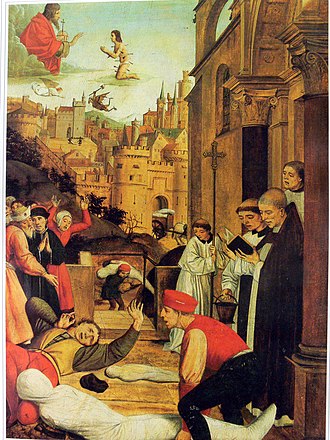
Plague of Justinian

The plague of Justinian or Justinianic plague was an epidemic of plague that afflicted the entire Mediterranean Basin, Europe, and the Near East, especially the Sasanian Empire and the Byzantine Empire. The plague is named for the Byzantine Emperor Justinian I who, according to his court historian Procopius, contracted the disease and…

Wikipedia · Plague of Justinian
Which African script, invented in the 1800s, writes the Vai language?
The Vai syllabary — of Liberia.

The Vai syllabary is a syllabic writing system devised for the Vai language by Momolu Duwalu Bukele of Jondu, in what is now Grand Cape Mount County, Liberia. Bukele is regarded within the Vai community, as well as by most scholars, as the syllabary's inventor and chief promoter when it was first documented in the 1830s. It is one of the…

Wikipedia · Vai syllabary
Which Song dynasty polymath described the magnetic compass for navigation?
Shen Kuo — in 1088.
Shen Kuo

Shen Kuo or Shen Gua, courtesy name Cunzhong (存中) and pseudonym Mengqi Weng (夢溪翁), was a Chinese polymath, scientist, and statesman of the Northern Song dynasty. Shen was a master in many fields of study including mathematics, optics, and horology. In his career as a civil servant, he became a finance minister, governmental state…

Wikipedia · Shen Kuo
Which Viking-founded Russian dynasty ruled until 1598?
The Rurikids — The Rurik dynasty, from 862.
Rurikids

The Rurik dynasty, also known as the Rurikid or Riurikid dynasty, as well as simply Rurikids or Riurikids, was a noble lineage founded by the Varangian prince Rurik, who, according to tradition, established himself at Novgorod in the year 862. The Rurikids were the ruling dynasty of Kievan Rus' and its principalities following its disintegration.

Wikipedia · Rurikids
Which Hellenistic queen's Berenice's Hair became a constellation?
Berenice II of Egypt — Berenice II — Coma Berenices.
Berenice II

Berenice II Euergetis was queen regnant of Cyrenaica from 258 to 246 BCE and queen of Ptolemaic Egypt from 246 to 222 BCE as the wife of Ptolemy III. She is sometimes considered co-regent of her Ptolemaic husband.

Wikipedia · Berenice II
Which ancient document records kings reigning for tens of thousands of years?
The Sumerian King List — 's mythic early reigns.
Sumerian King List

The Sumerian King List or Chronicle of the One Monarchy is an ancient literary composition written in Sumerian that was likely created and redacted to legitimize the claims to power of various city-states and kingdoms in southern Mesopotamia during the late third and early second millennium BC. It does so by repetitively listing Sumerian…

Wikipedia · Sumerian King List
Which Numidian king's defection helped Rome win Zama?
Masinissa — his cavalry turned the battle.
Masinissa

Masinissa, also spelled Massinissa, Massena and Massan, was an ancient Numidian king best known for leading a federation of Massylii Berber tribes during the Second Punic War, ultimately uniting them into a kingdom that became a major regional power in North Africa. Much of what is known about Masinissa comes from Livy's History of Rome,…

Wikipedia · Masinissa
Which Japanese battle of 1600 founded the Tokugawa peace?
Sekigahara — the realm decided in a day.
Battle of Sekigahara

The Battle of Sekigahara was an important battle in Japan which occurred on October 21, 1600 in what is now Gifu Prefecture, Japan, at the end of the Sengoku period.

Wikipedia · Battle of Sekigahara
Which queen of Palmyra defied Rome in the 3rd century?
Zenobia — she conquered Egypt before falling.
Zenobia

Septimia Zenobia was a third-century queen of the Palmyrene Empire in Syria. Many legends surround her ancestry; she was probably not a commoner. She married Odaenathus, who became king of the city of Palmyra in 260, elevating it to supreme power in the Near East by defeating the Sasanian Empire of Persia and stabilizing the Roman East.…

Wikipedia · Zenobia