Arts & Letters
Which Tang poet is often ranked China's greatest, the 'Poet Immortal'?
- Li Bai
- Du Fu
- Wang Wei
The answer is Li Bai. Du Fu is the 'Poet Sage'.
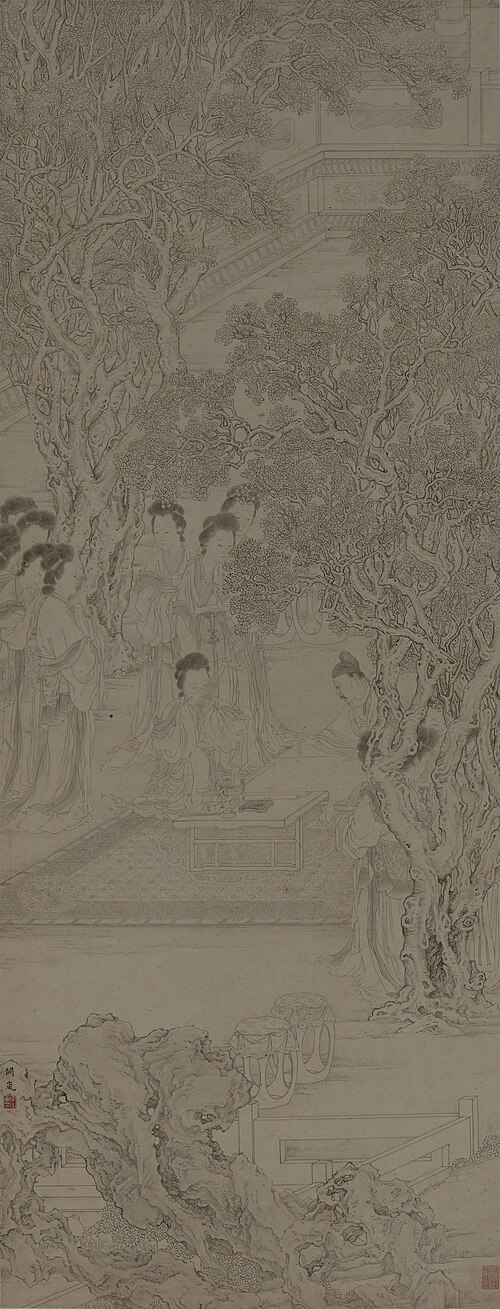
Li Bai, who lived from 701 to 762, is the Poet Immortal - shixian - and about a thousand poems survive under his name. He is the Tang dynasty's romantic: wine, moonlight, mountains, sudden departures, and a persistent sense that the official world is beneath him. He spent a couple of years at the emperor's Hanlin Academy and was let go, which suited the legend.
Chinese criticism almost always pairs him with his friend Du Fu, the Poet Sage, and the pairing is the point. Du Fu is the careful moralist who watched the empire come apart and wrote it down; Li Bai writes as though the poem arrived complete and he merely failed to duck. Both were caught in the An Lushan rebellion, and Li Bai backed the wrong prince, was condemned, and had the sentence commuted to exile before being pardoned on the road.
The famous death is a fake: drunk in a boat, reaching for the moon's reflection in the Yangtze, drowning. He almost certainly died of illness at a relative's house. But the invented ending has stuck for twelve hundred years because it is the right one for the work.
He has an odd second life in English. Ezra Pound worked from another scholar's notes and, in Cathay of 1915, produced versions of Li Bai that are unreliable as translation and enormously consequential as poetry - a good deal of English-language modernism came through that door.