Arts & Letters
Which Flemish polyphonist was called the 'Prince of Music' by contemporaries?
- Josquin des Prez
- Palestrina
- Orlando di Lasso
The answer is Josquin des Prez. Around 1500.
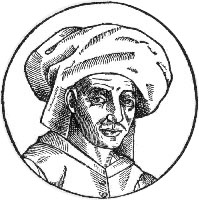
Josquin des Prez died in 1521 as the most admired composer in Europe, and the compliments paid to him were not the usual courtly noise. Martin Luther, who cared about music and said so, put it best: other composers do what the notes want, but Josquin makes the notes do what he wants.
The technical achievement was a way of writing for several voices in which each line enters in turn with the same melodic idea, so the texture is woven rather than stacked - and, crucially, in which the music bends to the meaning of the words rather than running on regardless. That sounds obvious now. It was not obvious then, and it is largely why his settings still land.
He also happens to mark the moment music became a publishing business. Ottaviano Petrucci in Venice, who had worked out how to print polyphony from movable type, issued three whole books of nothing but Josquin from 1502 - the first collections ever devoted to a single composer.
That fame produced a strange posthumous problem. His name sold books, so publishers began attaching it to other people's music. Georg Forster observed drily in 1540 that now that Josquin is dead, he is putting out more works than he did while he was alive. Modern scholars have spent decades taking pieces back off the list, and the canon is meaningfully smaller than it was a century ago.