Books and their authors, paintings and composers, films and music — the works, and the hands that made them.
Which of these do you read?
A book

A book is a written work of substantial length created by one or more authors. They can be distributed in various forms such as printed books, audiobooks, and electronic books (ebooks). Books are broadly classified into fiction, which contains invented narratives or other imaginary content, and non-fiction, which contains content intended as factual truth.
Wikipedia · BookWhich of these is a musical instrument?
A drum

The drum is a member of the percussion group of musical instruments. In the Hornbostel–Sachs classification system, it is a membranophone. Drums consist of at least one membrane, called a drumhead or drum skin, that is stretched over a shell and struck, either directly with the player's hands, or with a percussion mallet, to produce…
Wikipedia · DrumWhich instrument has black and white keys?
Piano — 88 keys on a full one.

A piano is a keyboard instrument that produces sound when its keys are pressed, activating an action mechanism where hammers strike strings. Modern pianos have a row of 88 black and white keys—with the exception of the Bosendörfer and Stuart & Sons pianos—and tuned to a chromatic scale in equal temperament. A musician who specializes in…
Wikipedia · PianoWhat kind of animal is Nemo in the film?
Clownfish — A clownfish.

Clownfish or anemonefishes are saltwater fish found in the warm and tropical waters of the Indo-Pacific. They mainly inhabit coral reefs and have a distinctive colouration typically consisting of white vertical bars on a red, orange, yellow, brown or black background. Clownfish developed a symbiotic and mutually beneficial relationship…
Wikipedia · ClownfishWhat are the three primary colors of paint?
Red, yellow, blue — Red, yellow and blue.

Primary colors are colorants or colored lights that can be mixed in varying amounts to produce a gamut of colors. This is the essential method used to create the perception of a broad range of colors in, e.g., electronic displays, color printing, and paintings. Perceptions associated with a given combination of primary colors can be…
Wikipedia · Primary colorWhat do you call a story acted out on a stage?
A play

A play is a form of theatre that primarily consists of script between speakers and is intended for acting rather than mere reading. The writer and author of a play is known as a playwright.
Wikipedia · Play (theatre)Who painted the Mona Lisa?
Leonardo da Vinci — in the early 1500s.

Leonardo di ser Piero da Vinci was an Italian polymath of the High Renaissance who was active as a painter, draughtsman, engineer, scientist, theorist, sculptor, and architect. While his fame initially rested on his achievements as a painter, he has also become known for his notebooks, in which he made drawings and notes on a variety of…
Wikipedia · Leonardo da VinciWhich composer wrote the Fifth Symphony that starts da-da-da-dum?
Beethoven — Ludwig van Beethoven.

Ludwig van Beethoven was a German composer, conductor, and pianist. Regarded as one of the greatest composers in the history of Western music, he was mentored during the Classical period, and his musical style was a key driver of the transition to Romantic music, and the expansion of instrumental forms such as the symphony, the piano…
Wikipedia · Ludwig van BeethovenWho wrote Romeo and Juliet?
William Shakespeare

William Shakespeare was an English playwright, poet and actor. He is widely regarded as the greatest writer in the English language and the world's pre-eminent dramatist. He is often called England's national poet and the "Bard of Avon" or simply "the Bard". His extant works, including collaborations, consist of some 39 plays, 154…
Wikipedia · William ShakespeareWhich artist cut off part of his own ear?
Vincent van Gogh — in 1888.

Vincent Willem van Gogh was a Dutch Post-Impressionist painter who is among the most famous and influential figures in the history of Western art. In just over a decade he created about 2,100 artworks, including around 860 oil paintings, most of them in the last two years of his life. They include landscapes, still lifes, portraits and…
Wikipedia · Vincent van GoghWho wrote The Jungle Book?
Rudyard Kipling — in 1894.

Joseph Rudyard Kipling was an English journalist, novelist, poet and short-story writer. He was born in British India, which inspired much of his work.
Wikipedia · Rudyard KiplingVan Gogh painted a famous series of which flower?
Sunflowers — painted in Arles in 1888.

Sunflowers is the title of two series of still life paintings by the Dutch painter Vincent van Gogh. The first series, executed in Paris in 1887, depicts the flowers lying on the ground, while the second set, made a year later in Arles, shows a bouquet of sunflowers in a vase. In the artist's mind, both sets were linked by the name of…
Wikipedia · Sunflowers (Van Gogh series)Who wrote Oliver Twist?
Charles Dickens — in 1838.

Charles John Huffam Dickens was an English writer and journalist. He created some of literature's best-known fictional characters, and is regarded by many as the greatest novelist of the Victorian era. His works enjoyed unprecedented popularity during his lifetime and, by the 20th century, critics and scholars had recognised him as a…
Wikipedia · Charles DickensWhich composer became deaf but kept writing music?
Beethoven — the Ninth Symphony came after.

Ludwig van Beethoven was a German composer, conductor, and pianist. Regarded as one of the greatest composers in the history of Western music, he was mentored during the Classical period, and his musical style was a key driver of the transition to Romantic music, and the expansion of instrumental forms such as the symphony, the piano…
Wikipedia · Ludwig van BeethovenWho painted the ceiling of the Sistine Chapel?
Michelangelo — between 1508 and 1512.

Michelangelo di Lodovico Buonarroti Simoni, known mononymously as Michelangelo, was an Italian sculptor, painter, architect, and poet of the High Renaissance. He was born in the Republic of Florence but was mostly active in Rome from his 30s onwards. His work was inspired by models from classical antiquity and had a lasting influence on…
Wikipedia · MichelangeloWhich novel features the characters Aslan and Lucy?
The Lion, the Witch and the Wardrobe — C.S. Lewis's Narnia classic.

The Lion, the Witch and the Wardrobe is a portal fantasy novel written by British author C. S. Lewis, published by Geoffrey Bles in 1950. It is the first published and best known of seven novels in The Chronicles of Narnia (1950–1956). Among all the author's books, it is also the most widely held in libraries. It was the first of The…
Wikipedia · The Lion, the Witch and the WardrobeWhich artist painted The Starry Night?
Vincent van Gogh — Van Gogh, in 1889.

Vincent Willem van Gogh was a Dutch Post-Impressionist painter who is among the most famous and influential figures in the history of Western art. In just over a decade he created about 2,100 artworks, including around 860 oil paintings, most of them in the last two years of his life. They include landscapes, still lifes, portraits and…
Wikipedia · Vincent van GoghWhich author created Sherlock Holmes?
Arthur Conan Doyle — Sir Arthur Conan Doyle.

Sir Arthur Ignatius Conan Doyle was a British writer and physician. He is best known for his four novels and fifty-six short stories about the fictional consulting detective Sherlock Holmes and his assistant Dr. Watson, which are milestones in crime fiction, and for his first work featuring Professor Challenger, The Lost World (1912),…
Wikipedia · Arthur Conan DoyleWhich writer created Miss Marple and Hercule Poirot?
Agatha Christie

Dame Agatha Mary Clarissa Mallowan, Lady Mallowan, usually known by her first married name, Agatha Christie, was an English author known for her 66 detective novels and 14 short-story collections, particularly those revolving around fictional detectives Hercule Poirot, Tommy and Tuppence, and Miss Marple. She is widely regarded as one of…
Wikipedia · Agatha ChristieWho wrote The Adventures of Tom Sawyer?
Mark Twain — in 1876.

Samuel Langhorne Clemens, known by the pen name Mark Twain, was an American writer, humorist, and essayist. He has been praised as the "greatest humorist the United States has produced", with William Faulkner calling him "the father of American literature". Twain's novels include The Adventures of Tom Sawyer (1876) and its sequel,…
Wikipedia · Mark TwainWho wrote Pride and Prejudice?
Jane Austen — published in 1813.

Jane Austen was an English writer known primarily for her six novels, which implicitly interpret, critique, and comment on the English landed gentry at the end of the 18th century.
Wikipedia · Jane AustenWho painted Girl with a Pearl Earring?
Johannes Vermeer — Vermeer, around 1665.

Johannes Vermeer was a Dutch painter who specialized in domestic interior scenes of middle-class life. He is considered one of the greatest painters of the Dutch Golden Age. During his lifetime, he was a moderately successful provincial genre painter, recognized in Delft and The Hague. He produced relatively few paintings, primarily…
Wikipedia · Johannes VermeerWhich novel begins with the line 'Call me Ishmael'?
Moby-Dick — by Herman Melville.

Moby-Dick; or, The Whale is an 1851 epic novel by American writer Herman Melville. The book centers on the sailor Ishmael's narrative of the maniacal quest of Ahab, captain of the whaling ship Pequod, for vengeance against Moby Dick, the giant white sperm whale that bit off his leg on the ship's previous voyage. A contribution to the…
Wikipedia · Moby-DickWhich composer wrote the opera The Magic Flute?
Mozart — in 1791.

Wolfgang Amadeus Mozart was a Classical composer and musician. He completed more than 800 works in his life—including outstanding examples of most of the genres of his time: symphonies, concertos, chamber music, opera, and choral music—and is regarded as one of the greatest composers in the history of Western music.
Wikipedia · Wolfgang Amadeus MozartWho wrote the play A Midsummer Night's Dream?
Shakespeare — William Shakespeare.

William Shakespeare was an English playwright, poet and actor. He is widely regarded as the greatest writer in the English language and the world's pre-eminent dramatist. He is often called England's national poet and the "Bard of Avon" or simply "the Bard". His extant works, including collaborations, consist of some 39 plays, 154…
Wikipedia · William ShakespeareWhich artist painted Water Lilies?
Claude Monet — Monet, in his garden at Giverny.

Oscar-Claude Monet was a French painter and founder of Impressionism who is seen as a key precursor to modernism, especially in his attempts to paint nature as he perceived it. During his long career, he was the most consistent and prolific practitioner of Impressionism's philosophy of expressing one's perceptions of nature, especially…
Wikipedia · Claude MonetWhich author wrote 1984?
George Orwell — published 1949.

Eric Arthur Blair was an English novelist, poet, essayist, journalist, and critic who wrote under the pen name of George Orwell. His work is characterised by lucid prose, social criticism, opposition to all totalitarianism, and support of democratic socialism.
Wikipedia · George OrwellWho wrote Frankenstein?
Mary Shelley — at just 20 years old.

Mary Wollstonecraft Shelley was an English novelist who wrote the Gothic novel Frankenstein; or, The Modern Prometheus (1818), which is considered an early example of science fiction. She also edited and promoted the works of her husband, the Romantic poet and philosopher Percy Bysshe Shelley. Her father was the political philosopher…
Wikipedia · Mary ShelleyWhich composer wrote The Nutcracker?
Tchaikovsky — in 1892.

Pyotr Ilyich Tchaikovsky was a Russian composer of the Romantic period. He was the first Russian composer whose music made a lasting impression internationally. Tchaikovsky wrote some of the most popular concert and theatrical music in the classical repertoire, including the 1812 Overture, his First Piano Concerto, the Violin Concerto,…
Wikipedia · Pyotr Ilyich TchaikovskyWhich novel features the character Atticus Finch?
To Kill a Mockingbird — Harper Lee's To Kill a Mockingbird.

To Kill a Mockingbird is a 1960 Southern Gothic novel by American author Harper Lee. It became instantly successful after its release; in the United States, it is widely read in high schools and middle schools. To Kill a Mockingbird won the Pulitzer Prize a year after its release, and it has become a classic of modern American…
Wikipedia · To Kill a MockingbirdWho painted The Scream?
Edvard Munch — Munch, in 1893.

Edvard Munch was a Norwegian painter. His 1893 work The Scream has become one of the most iconic and acclaimed images in all of Western art.
Wikipedia · Edvard MunchWho wrote the music for West Side Story?
Leonard Bernstein — in 1957.

Leonard Bernstein was an American conductor, composer, pianist, music educator, author, and humanitarian. Considered to be one of the most important conductors of his time, he was the first American-born conductor to receive international acclaim. Bernstein was "one of the most prodigiously talented and successful musicians in American…
Wikipedia · Leonard BernsteinWho wrote One Hundred Years of Solitude?
Gabriel Garcia Marquez — Garcia Marquez, published in 1967.

Gabriel José García Márquez was a Colombian writer and journalist, known affectionately as Gabo or Gabito throughout Latin America. Considered one of the most significant authors of the 20th century, particularly in the Spanish language, he was awarded the 1972 Neustadt International Prize for Literature and the 1982 Nobel Prize in…
Wikipedia · Gabriel García MárquezWhich artist co-founded Cubism with Picasso?
Georges Braque

Georges Braque was a major 20th-century French painter, collagist, draughtsman, printmaker and sculptor. His most notable contributions were in his alliance with Fauvism from 1905, and the role he played in the development of Cubism. Braque's work between 1908 and 1912 is closely associated with that of his colleague Pablo Picasso. Their…
Wikipedia · Georges BraqueWho painted Guernica?
Pablo Picasso — Picasso, in 1937.

Pablo Ruiz Picasso was a Spanish painter and sculptor who spent most of his adult life in France. One of the most influential artists of the 20th century, he is known for co-founding the Cubist movement, the invention of constructed sculpture, the co-invention of collage, and for the wide variety of styles that he helped develop and…
Wikipedia · Pablo PicassoWhich author created Middle-earth?
J.R.R. Tolkien — Tolkien, in The Hobbit and The Lord of the Rings.

John Ronald Reuel Tolkien was an English writer and academic philologist. He was the author of the high fantasy works The Hobbit (1937) and The Lord of the Rings (1954–1955).
Wikipedia · J. R. R. TolkienWho wrote the play Waiting for Godot?
Samuel Beckett — Beckett, premiered 1953.

Samuel Barclay Beckett was an Irish playwright, novelist, and poet. Written in both English and French, his literary and theatrical works feature bleak, impersonal, and tragicomic episodes of life, coupled with black comedy and literary nonsense. Beckett is widely regarded as one of the most influential and important writers of the 20th…
Wikipedia · Samuel BeckettWhich composer wrote the Ride of the Valkyries?
Richard Wagner — Wagner, from the opera Die Walkure.

Wilhelm Richard Wagner was a German composer, theatre director, essayist, and conductor, best known for his operas, although his mature works are often referred to as music dramas. Unlike most composers, Wagner wrote both the libretti and the music for all of his stage works. He first achieved recognition with works in the Romantic…
Wikipedia · Richard WagnerWho wrote Crime and Punishment?
Fyodor Dostoevsky — Dostoevsky, in 1866.

Fyodor Mikhailovich Dostoevsky was a Russian philosopher, novelist, short story writer, essayist and journalist. He is regarded as one of the greatest novelists in both Russian and world literature, and many of his works are considered highly influential masterpieces. Dostoevsky's literary works explore the human condition in the…
Wikipedia · Fyodor DostoevskyWhich instrument did Louis Armstrong famously play?
Trumpet

The trumpet is a brass instrument. The most common type of trumpet is a transposing instrument in B♭, with pitches sounding a whole step lower than written. The trumpet family includes instruments ranging from the piccolo trumpet, with the highest register in the brass family, to the bass trumpet, pitched one octave below the standard B♭ or C trumpet.
Wikipedia · TrumpetWhich novel features the dystopia of soma and test-tube babies?
Brave New World — Aldous Huxley's Brave New World.

Brave New World is a dystopian novel by English author Aldous Huxley, written in 1931, and published in 1932. Largely set in a futuristic World State, whose citizens are environmentally engineered into an intelligence-based social hierarchy, the novel anticipates huge scientific advancements in reproductive technology, sleep-learning,…
Wikipedia · Brave New WorldWho painted the Birth of Venus?
Sandro Botticelli — Botticelli, in the 1480s.

Alessandro di Mariano di Vanni Filipepi, better known as Sandro Botticelli or simply Botticelli, was an Italian painter of the Early Renaissance. Botticelli's posthumous reputation suffered until the late 19th century, when he was rediscovered by the Pre-Raphaelites who stimulated a reappraisal of his work. Since then, his paintings have…
Wikipedia · Sandro BotticelliWhich Shakespeare play features the Three Witches?
Macbeth

The Tragedy of Macbeth, often shortened to Macbeth, is a tragedy by William Shakespeare, estimated to have been first performed in 1606. It dramatises the physically violent and damaging psychological effects of political ambitions and power. It was first published in the Folio of 1623, possibly from a prompt book, and is Shakespeare's…
Wikipedia · MacbethWho wrote the poem The Raven?
Edgar Allan Poe — Poe, in 1845 — 'Nevermore'.

Edgar Allan Poe was an American writer, poet, editor, and literary critic who is best known for his poetry and short stories, particularly his tales involving mystery and the macabre. He is widely regarded as one of the central figures of Romanticism and Gothic fiction in the United States and of early American literature. Poe was one of…
Wikipedia · Edgar Allan PoeWho painted American Gothic?
Grant Wood — in 1930.

Grant DeVolson Wood was an American artist and representative of Regionalism, best known for his paintings depicting the rural American Midwest. He is particularly well known for American Gothic (1930), which has become an iconic example of early 20th-century American art.
Wikipedia · Grant WoodWhich composer's Ninth Symphony contains the Ode to Joy?
Beethoven — now the EU anthem.

Ludwig van Beethoven was a German composer, conductor, and pianist. Regarded as one of the greatest composers in the history of Western music, he was mentored during the Classical period, and his musical style was a key driver of the transition to Romantic music, and the expansion of instrumental forms such as the symphony, the piano…
Wikipedia · Ludwig van BeethovenWho wrote the short story collection Dubliners?
James Joyce — Joyce, published 1914.

James Augustine Aloysius Joyce was an Irish novelist, poet, and literary critic. He contributed to the modernist movement and is regarded among the most influential and important writers of the 20th century. Joyce's novel Ulysses (1922) is a landmark in which the episodes of Homer's Odyssey are paralleled in a variety of literary styles,…
Wikipedia · James JoyceWho painted The Night Watch?
Rembrandt — in 1642.

Rembrandt Harmenszoon van Rijn, known mononymously as Rembrandt, was a Dutch Golden Age painter, printmaker, and draughtsman. He is generally considered one of the greatest visual artists in the history of Western art. It is estimated that Rembrandt's surviving works amount to about three hundred paintings, three hundred etchings, and…
Wikipedia · RembrandtWho wrote The Master and Margarita?
Mikhail Bulgakov — Bulgakov, published long after his death.

Mikhail Afanasyevich Bulgakov was a Russian and Soviet novelist and playwright. His novel The Master and Margarita, published posthumously, has been called one of the masterpieces of the 20th century. He also wrote the novel The White Guard and the plays Ivan Vasilievich, Flight, and The Days of the Turbins.
Wikipedia · Mikhail BulgakovWho composed the opera Madama Butterfly?
Giacomo Puccini — Puccini, premiered 1904.

Giacomo Antonio Domenico Michele Secondo Maria Puccini was an Italian composer known primarily for his operas. Widely regarded as the greatest and most successful proponent of Italian opera after Verdi, he was descended from a long line of composers, stemming from the late Baroque era. Though his early work was firmly rooted in…
Wikipedia · Giacomo PucciniWhich novel features the whaling ship Pequod's captain?
Captain Ahab — Ahab, hunting the white whale.

Captain Ahab is a fictional character and one of the protagonists in Herman Melville's Moby-Dick (1851). He is the monomaniacal captain of the whaling ship Pequod. On a previous voyage, the white whale Moby Dick bit off Ahab's leg and he now wears a prosthetic leg made out of ivory. The whaling voyage of the Pequod ends up as a hunt for…
Wikipedia · Captain AhabWhich poet wrote 'Do not go gentle into that good night'?
Dylan Thomas — for his dying father.

Dylan Marlais Thomas was a Welsh poet and writer, whose works include the poems "Do not go gentle into that good night" and "And death shall have no dominion", as well as the "play for voices" Under Milk Wood. He also wrote stories and radio broadcasts such as A Child's Christmas in Wales and Portrait of the Artist as a Young Dog. He…
Wikipedia · Dylan ThomasWho painted Las Meninas?
Diego Velazquez — Velazquez, in 1656.

Diego Rodríguez de Silva y Velázquez was a Spanish Baroque painter, the leading artist in the court of King Philip IV of Spain and Portugal, and of the Spanish Golden Age. He is generally considered one of the greatest artists in the history of Western art.
Wikipedia · Diego VelázquezWhich playwright wrote A Streetcar Named Desire?
Tennessee Williams — Williams, in 1947.

Thomas Lanier Williams III, known by his pen name Tennessee Williams, was an American playwright and screenwriter. Along with contemporaries Eugene O'Neill and Arthur Miller, he is considered among the three foremost playwrights of 20th-century American drama.
Wikipedia · Tennessee WilliamsWho wrote the philosophical work Thus Spoke Zarathustra?
Friedrich Nietzsche — Nietzsche, in the 1880s.

Friedrich Wilhelm Nietzsche was a German philosopher and writer who started his career as a classical philologist and turned to philosophy early in his academic career. In 1869, at age 24, he was appointed Professor of Classical Philology at the University of Basel. Plagued by health problems for most of his life, he resigned from the…
Wikipedia · Friedrich NietzscheWhich composer wrote 27 piano concertos and died at 35?
Mozart — 1756-1791.

Wolfgang Amadeus Mozart was a Classical composer and musician. He completed more than 800 works in his life—including outstanding examples of most of the genres of his time: symphonies, concertos, chamber music, opera, and choral music—and is regarded as one of the greatest composers in the history of Western music.
Wikipedia · Wolfgang Amadeus MozartWhich artist created the sculpture The Thinker?
Auguste Rodin — Rodin, cast in 1904.

François Auguste René Rodin was a French sculptor generally considered the founder of modern sculpture. He was schooled traditionally and took a craftsman-like approach to his work. Rodin possessed a unique ability to model a complex, turbulent, and deeply pocketed surface in clay. He is known for such sculptures as The Thinker, Monument…
Wikipedia · Auguste RodinWhich novel's opening line mentions a bright cold day in April and clocks striking thirteen?
1984 — Orwell's 1984.

1984 (MCMLXXXIV) was a leap year starting on Sunday of the Gregorian calendar, the 1984th year of the Common Era (CE) and Anno Domini (AD) designations, the 984th year of the 2nd millennium, the 84th year of the 20th century, and the 5th year of the 1980s decade.
Wikipedia · 1984Which painter was court artist to Philip IV of Spain?
Velazquez — for nearly 40 years.

Velázquez, also Velazquez, Velásquez or Velasquez, is a surname from Spain. It is a patronymic name, meaning "son of Velasco".
Wikipedia · VelazquezWho wrote the novel Things Fall Apart?
Chinua Achebe — Achebe, in 1958.

Chinua Achebe was a Nigerian novelist, poet, and critic who is regarded as a central figure of modern African literature. His first novel and magnum opus, Things Fall Apart (1958), occupies a pivotal place in African literature and remains the most widely studied, translated, and read African novel. Along with Things Fall Apart, his No…
Wikipedia · Chinua AchebeWho wrote Invisible Man (1952)?
Ralph Ellison

Ralph Waldo Ellison was an American writer, literary critic, and scholar best known for his novel Invisible Man, which won the National Book Award in 1953.
Wikipedia · Ralph EllisonWhich epic poem tells of Aeneas fleeing Troy?
The Aeneid — Virgil's Aeneid.

The Aeneid is a Latin epic poem that tells the legendary story of Aeneas, a Trojan who fled the fall of Troy and travelled to Italy, where he became the ancestor of the Romans. Written by the Roman poet Virgil between 29 and 19 BC, the Aeneid comprises 9,896 lines in dactylic hexameter. The first six of its twelve books tell the story of…
Wikipedia · AeneidWhich author created the detective Philip Marlowe?
Raymond Chandler — Chandler, in The Big Sleep.

Raymond Thornton Chandler was an American-British novelist and screenwriter. In 1932, at age 44, Chandler became a detective fiction writer after losing his job as an oil company executive during the Great Depression. His first short story, "Blackmailers Don't Shoot", was published in 1933 in Black Mask, a pulp magazine. His first novel,…
Wikipedia · Raymond ChandlerWho painted Nighthawks, the lonely diner scene?
Edward Hopper — Hopper, in 1942.

Edward Hopper was an American realist painter and printmaker. He is one of America's most renowned artists and known for his skill in depicting modern American life and landscapes.
Wikipedia · Edward HopperWho wrote the sonnet beginning 'Shall I compare thee to a summer's day'?
Shakespeare — Sonnet 18.

William Shakespeare was an English playwright, poet and actor. He is widely regarded as the greatest writer in the English language and the world's pre-eminent dramatist. He is often called England's national poet and the "Bard of Avon" or simply "the Bard". His extant works, including collaborations, consist of some 39 plays, 154…
Wikipedia · William ShakespeareWho wrote Don Quixote?
Miguel de Cervantes — Cervantes — part one in 1605.

Miguel de Cervantes Saavedra was a Spanish writer widely regarded as the greatest writer in the Spanish language and one of the world's pre-eminent novelists. He is best known for his two-part novel Don Quixote, a work considered to be the first modern novel. Don Quixote has been labelled by many well-known authors as the "best book of…
Wikipedia · Miguel de CervantesWho wrote the twelve-volume novel cycle In Search of Lost Time?
Marcel Proust — Proust — famously begun with a madeleine.

Valentin Louis Georges Eugène Marcel Proust was a French novelist, literary critic, and essayist best known for his novel À la recherche du temps perdu, which was published in seven volumes between 1913 and 1927. He is considered by critics and writers to be one of the most influential authors of the twentieth century.
Wikipedia · Marcel ProustWho painted The Garden of Earthly Delights?
Hieronymus Bosch — Bosch, around 1500.

Hieronymus Bosch was a Dutch painter from Brabant. He is one of the most notable representatives of the Early Netherlandish painting school. His work, generally oil on oak wood, mainly contains fantastic illustrations of religious concepts and narratives. Within his lifetime, his work was collected in the Netherlands, Austria, and Spain,…
Wikipedia · Hieronymus BoschWhich Roman historian wrote the Annals covering Tiberius to Nero?
Tacitus

Publius Cornelius Tacitus, known simply as Tacitus, was a Roman historian and politician. He is widely regarded as one of the greatest Roman historians by modern scholars.
Wikipedia · TacitusWhich philosopher wrote Leviathan in 1651?
Thomas Hobbes — Hobbes — life outside the state is 'nasty, brutish, and short'.

Thomas Hobbes was an English philosopher and political theorist, best known for his 1651 book Leviathan, in which he expounds an influential formulation of social contract theory. He is considered to be one of the founders of modern political philosophy.
Wikipedia · Thomas HobbesWhich author wrote the novella The Metamorphosis?
Franz Kafka — Kafka — Gregor Samsa wakes as an insect.

Franz Kafka was a German-language Jewish Czech writer and novelist born in Prague, in the Austro-Hungarian Empire. Widely regarded as a major figure of 20th-century literature, his works fuse elements of realism and the fantastique, and typically feature isolated protagonists facing bizarre or surreal predicaments and incomprehensible…
Wikipedia · Franz KafkaWhich English poet wrote Paradise Lost while blind?
John Milton — Milton, dictating it in the 1660s.

John Milton was an English poet, polemicist, and civil servant. His 1667 epic poem Paradise Lost was written in blank verse and included 12 books, written in a time of immense religious flux and political upheaval. It addressed the fall of man, including the temptation of Adam and Eve by the fallen angel Satan, and God's expulsion of…
Wikipedia · John MiltonWho wrote the poem The Waste Land?
T.S. Eliot — Eliot, in 1922, edited by Pound.

Thomas Stearns Eliot was a poet, essayist and playwright. He was a leading figure of modernist poetry in the English language where he altered the art through his use of pessimistic language, writing style, and verse structure. Awarded the Nobel Prize in Literature in 1948, he is considered one of the greatest poets of the English…
Wikipedia · T. S. EliotWhich Russian composer wrote Pictures at an Exhibition?
Modest Mussorgsky — Mussorgsky, in 1874.

Modest Petrovich Mussorgsky was a Russian composer, one of the group known as "The Five." He was an innovator of Russian music in the Romantic period and strove to achieve a uniquely Russian musical identity, often in deliberate defiance of the established conventions of Western music.
Wikipedia · Modest MussorgskyWho painted the Arnolfini Portrait?
Jan van Eyck — Van Eyck, in 1434.

Jan van Eyck was an early Netherlandish painter active in Bruges who was one of the early innovators of what became known as early Netherlandish painting, and one of the supreme figures of the Early Northern Renaissance. Such was his legacy, that he has been called "the inventor of oil-painting" by Vasari, Ernst Gombrich, and others,…
Wikipedia · Jan van EyckWho wrote the Divine Comedy?
Dante Alighieri — Dante, finished around 1320.

Dante Alighieri, widely known mononymously as Dante, was an Italian poet, writer, and philosopher. His Divine Comedy, originally called Comedìa and later christened Divina by Giovanni Boccaccio, is widely considered one of the most important poems of the Middle Ages and the greatest literary work in the Italian language.
Wikipedia · Dante AlighieriWhich opera by Bizet features the Toreador Song?
Carmen — premiered 1875.

Carmen is an opera in four acts by the French composer Georges Bizet. The libretto was written by Henri Meilhac and Ludovic Halévy, based on the novella of the same title by Prosper Mérimée. The opera was first performed by the Opéra-Comique in Paris on 3 March 1875, where its breaking of conventions shocked and scandalised its first…
Wikipedia · CarmenWho composed the opera Don Giovanni?
Mozart — premiered in Prague, 1787.

Wolfgang Amadeus Mozart was a Classical composer and musician. He completed more than 800 works in his life—including outstanding examples of most of the genres of his time: symphonies, concertos, chamber music, opera, and choral music—and is regarded as one of the greatest composers in the history of Western music.
Wikipedia · Wolfgang Amadeus MozartWhich composer's 'unfinished' symphony has only two movements?
Schubert — 's Eighth.

Franz Peter Schubert was an Austrian composer of the late Classical and early Romantic eras. He was immensely prolific despite living a short life, leaving behind a vast oeuvre of more than 1,000 compositions, including over 600 Lieder and other vocal works, seven complete symphonies, sacred music, operas, incidental music, and a large…
Wikipedia · Franz SchubertWhich artist painted The Persistence of Memory, with melting clocks?
Salvador Dali — Dali, in 1931.

Salvador Domingo Felipe Jacinto Dalí i Domènech, Marquess of Dalí de Púbol, known as Salvador Dalí, was a Spanish surrealist artist renowned for his technical skill, precise draftsmanship, and the striking and bizarre images in his work.
Wikipedia · Salvador DalíWhich playwright wrote The Cherry Orchard?
Anton Chekhov — Chekhov, his last play, 1904.

Anton Pavlovich Chekhov was a Russian playwright and short story writer. Widely considered one of the greatest writers of all time, his career as a playwright produced four classics, and his best short stories are held in high esteem by writers and critics. Along with Henrik Ibsen and August Strindberg, Chekhov is often referred to as…
Wikipedia · Anton ChekhovWhich author's Foundation series shaped science fiction?
Isaac Asimov — Asimov, beginning 1942.

Isaac Asimov was an American writer and professor of biochemistry at Boston University. During his lifetime, Asimov was considered one of the "Big Three" science fiction writers, along with Robert A. Heinlein and Arthur C. Clarke. He wrote or edited more than 500 books and an estimated 90,000 letters and postcards. Best known for his…
Wikipedia · Isaac AsimovWhich Anglo-Saxon epic poem features Grendel?
Beowulf

Beowulf is an Old English poem, an epic in the tradition of Germanic heroic legend consisting of 3,182 alliterative lines, contained in the Nowell Codex. It is one of the most important and most often translated works of Old English literature. The date of composition is a matter of contention among scholars; the only certain dating is…
Wikipedia · BeowulfWho painted the Sistine Madonna, with its two famous cherubs?
Raphael — around 1512.

Raffaello Sanzio da Urbino, now generally known in English as Raphael, was an Italian painter and architect of the High Renaissance. His work is admired for its clarity of form, ease of composition, and visual achievement of the Neoplatonic ideal of human grandeur. Together with Leonardo da Vinci and Michelangelo, he forms the…
Wikipedia · RaphaelWhich 1516 book coined the word for an ideal society?
Utopia — Thomas More's Utopia — 'no place'.

A utopia is an imagined community or society that possesses highly desirable or near-perfect qualities for its residents. The term was coined by Sir Thomas More for his 1516 book Utopia, which describes a fictional island society in the New World, but some utopian visions predate it.
Wikipedia · UtopiaWhich Russian author wrote Dead Souls?
Nikolai Gogol — Gogol, in 1842.

Nikolai Vasilyevich Gogol was a Russian novelist, short-story writer, and playwright of Ukrainian origin.
Wikipedia · Nikolai GogolWho wrote the play Rosencrantz and Guildenstern Are Dead?
Tom Stoppard — Stoppard, in 1966.

Sir Tom Stoppard was a British playwright and screenwriter. He wrote for film, radio, stage, and television, finding prominence with plays. His work covered the themes of human rights, censorship, and political freedom, often delving into the deeper philosophical bases of society. Stoppard, a playwright of the Royal National Theatre, was…
Wikipedia · Tom StoppardWhich French novelist wrote Madame Bovary?
Gustave Flaubert — Flaubert, tried for obscenity in 1857.

Gustave Flaubert was a French novelist. He has been considered the leading exponent of literary realism in his country and abroad. He is known especially for his debut novel Madame Bovary (1857), his Correspondence, and his scrupulous devotion to his style and aesthetics. The celebrated writer Guy de Maupassant was a protégé of Flaubert.
Wikipedia · Gustave FlaubertWhich composer wrote the Symphonie fantastique about an artist's opium dream?
Hector Berlioz — Berlioz, in 1830.

Louis-Hector Berlioz was a French Romantic composer, conductor and critic. His output includes orchestral works such as the Symphonie fantastique and Harold in Italy, choral pieces including the Requiem and L'Enfance du Christ, his three operas Benvenuto Cellini, Les Troyens and Béatrice et Bénédict, and works of hybrid genres such as…
Wikipedia · Hector BerliozWhich artist's Black Square of 1915 founded Suprematism?
Kazimir Malevich — Malevich.

Kazimir Severinovich Malevich was a Russian avant-garde artist and art theorist, whose work and writings pioneered the development of abstract painting in the 20th century. He is best known as the founder of Suprematism, a radically non-objective form of painting he introduced in 1915.
Wikipedia · Kazimir MalevichWho wrote Doctor Zhivago?
Boris Pasternak — Pasternak — forced to refuse the 1958 Nobel.
Who wrote the Decameron during the Black Death?
Giovanni Boccaccio — Boccaccio — 100 tales told in quarantine.

Giovanni Boccaccio was an Italian writer, poet, correspondent of Petrarch, and an important Renaissance humanist. Born in the town of Certaldo, he became so well known as a writer that he was sometimes simply known as "the Certaldese". He was one of the most important figures in the European literary panorama of the fourteenth century.…
Wikipedia · Giovanni BoccaccioWhich economist wrote The General Theory of Employment, Interest and Money?
John Maynard Keynes — Keynes, in 1936.

John Maynard Keynes, 1st Baron Keynes, was an English economist whose writings are considered the basis for the school of thought known as Keynesian economics, as well as its various offshoots. Originally trained in mathematics, he built on and refined earlier work on the causes of business cycles. His ideas, further developed after his…
Wikipedia · John Maynard KeynesWhich Norwegian playwright wrote A Doll's House?
Henrik Ibsen — Ibsen — Nora's door slam shook 1879.

Henrik Johan Ibsen was a Norwegian playwright. He is considered one of the world's pre-eminent writers of the 19th century and is often referred to as "the father of modern drama". He pioneered theatrical realism but also wrote lyrical epic works. His major works include Brand, Peer Gynt, Emperor and Galilean, A Doll's House, Ghosts, An…
Wikipedia · Henrik IbsenWhich Spanish artist painted the Black Paintings on his own walls?
Francisco Goya — Goya, in his final dark years.

Francisco José de Goya y Lucientes was a Spanish romantic painter and printmaker. He is considered the most important Spanish artist of the late 18th and early 19th centuries. His paintings, drawings, and engravings reflected contemporary historical upheavals and influenced important 19th- and 20th-century painters. Goya is often…
Wikipedia · Francisco GoyaWhich composer's Cello Suites were revived by Pablo Casals?
Bach — 's — found in a Barcelona shop.

Johann Sebastian Bach was a German composer and musician of the late Baroque period. He is known for his prolific output across a variety of instruments and forms, including the orchestral Brandenburg Concertos; solo instrumental works such as the Cello Suites and Sonatas and Partitas for Solo Violin; keyboard works such as the Goldberg…
Wikipedia · Johann Sebastian BachWhich Bronte sister wrote The Tenant of Wildfell Hall?
Anne — Bronte, the youngest.

Anne, alternatively spelled Ann, is a form of the Latin female name Anna. This in turn is a representation of the Hebrew Hannah, which means 'favour' or 'grace'. Related names include Annie and Ana.
Wikipedia · AnneWhich composer wrote the Hungarian Rhapsodies?
Franz Liszt — Liszt, virtuoso showpieces.

Franz Liszt was a Hungarian composer, virtuoso pianist, conductor and teacher of the Romantic period. With a diverse body of work spanning more than six decades, he is considered to be one of the most prolific and influential composers of his era, and his piano works continue to be widely performed and recorded.
Wikipedia · Franz LisztWhich Persian poet wrote the Shahnameh, the Book of Kings?
Ferdowsi — 50,000 couplets over 30 years.

Abolqasem Mansour bin Hassan Tusi (940–1025), better known by his pen name Ferdowsi, was a Persian poet who is notable for being the author of the Shahnameh, which is one of the world's longest epic poems created by a single poet, and the greatest epic of Persian-speaking countries. Ferdowsi is celebrated as one of the most influential…
Wikipedia · FerdowsiWhich Flemish polyphonist was called the 'Prince of Music' by contemporaries?
Josquin des Prez — around 1500.

Josquin Lebloitte dit des Prez was a composer of Renaissance music, who is variously described as French or Franco-Flemish. Considered one of the greatest composers of the Renaissance, he was a central figure of the Franco-Flemish School and had a profound influence on the music of 16th-century Europe. Building on the work of his…
Wikipedia · Josquin des PrezWho painted Las Hilanderas (The Spinners)?
Velazquez — myth hidden in a workshop scene.

Velázquez, also Velazquez, Velásquez or Velasquez, is a surname from Spain. It is a patronymic name, meaning "son of Velasco".
Wikipedia · VelazquezWhich Byzantine empress, a former actress, co-ruled with Justinian?
Theodora — she stopped his flight in the Nika riots.
Which Tang poet is often ranked China's greatest, the 'Poet Immortal'?
Li Bai — Du Fu is the 'Poet Sage'.

Li Bai, also known by his courtesy name of Taibai, was a Chinese poet acclaimed as one of the best and most important poets of the Tang dynasty, and even in the whole of Chinese poetry. He and his friends such as Du Fu (712–770) were among the prominent figures in the flourishing of Chinese poetry of the Tang dynasty, often called the…
Wikipedia · Li BaiWhich novel by Junichiro Tanizaki praises Japanese aesthetics of shadow?
In Praise of Shadows — his 1933 essay.

In Praise of Shadows is an essay by Jun'ichirō Tanizaki about Japanese aesthetics. Tanizaki's observations include cultural notes on customs and tradition, people, historical places and buildings, discussion of various materials and craft techniques, as well as food and even unusual recipes as seen through the author's metaphorical lens…
Wikipedia · In Praise of ShadowsWhich opera by Alban Berg was left unfinished at his death?
Lulu — completed by others decades later.
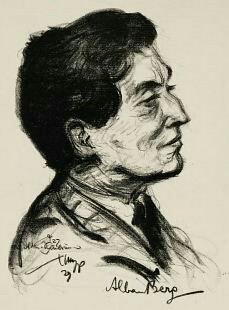
Lulu is an opera in three acts by Alban Berg. Berg adapted the libretto from Frank Wedekind's two Lulu plays, Erdgeist and Die Büchse der Pandora. Berg died before completing the third and final act, and the opera was typically performed as a "torso" until Friedrich Cerha's 1979 orchestration of the act 3 sketches, which is now…
Wikipedia · Lulu (opera)Which composer's Vespers of 1610 revolutionized sacred music?
Claudio Monteverdi — Monteverdi.

Claudio Giovanni Antonio Monteverdi was an Italian composer, choirmaster and string player. A composer of both secular and sacred music, and a pioneer in the development of opera, he is considered a crucial transitional figure between the Renaissance and Baroque periods of music history.
Wikipedia · Claudio MonteverdiWho wrote The Leopard, the novel of Sicily's fading nobility?
Giuseppe Tomasi di Lampedusa — Lampedusa — published after his death.

Giuseppe Tomasi, 11th Prince of Lampedusa, 12th Duke of Palma, GE, known as Giuseppe Tomasi di Lampedusa, was a Sicilian writer, as well as the last generation of Tomasi Princes of Lampedusa before the family's and their titles' extinction.
Wikipedia · Giuseppe Tomasi di LampedusaWhich novel of 1899 scandalized readers with Edna Pontellier's awakening?
The Awakening — Kate Chopin's The Awakening.
Which composer wrote the microtonal-leaning Concord Sonata?
Charles Ives — Ives, honoring the Transcendentalists.

Charles Edward Ives was an American modernist composer, actuary and businessman. Ives was among the earliest renowned American composers to achieve recognition on a global scale. His music was largely ignored during his early career, and many of his works went unperformed for many years. Later in life, the quality of his music was…
Wikipedia · Charles IvesWhich Portuguese poet wrote under dozens of 'heteronyms'?
Fernando Pessoa — Pessoa — Caeiro, Campos, Reis and more.

Fernando António Nogueira de Seabra Pessoa was a Portuguese poet, writer, literary critic, translator, and publisher. He has been described as one of the most significant literary figures of the 20th century and one of the greatest poets in the Portuguese literature. He also wrote in and translated from English and French.
Wikipedia · Fernando PessoaWhich author's 'A House for Mr Biswas' drew on Trinidad?
V.S. Naipaul — Naipaul, published 1961.

Sir Vidiadhar Surajprasad Naipaul was a Trinidad and Tobago-born British writer renowned for his works of fiction and nonfiction in English. He is known for his comic early novels set in Trinidad, his bleaker novels of alienation in the wider world, and his vigilant chronicles of life and travels. He wrote in prose that was widely…
Wikipedia · V. S. NaipaulWhich novel narrated by Death is set in Nazi Germany?
The Book Thief — Markus Zusak's The Book Thief.

The Book Thief is a historical fiction novel by the Australian author Markus Zusak, set in Nazi Germany during World War II. Published in 2005, The Book Thief became an international bestseller and was translated into 63 languages and sold 17 million copies. It was adapted into the 2013 feature film, The Book Thief.
Wikipedia · The Book Thief