Arts & Letters
Which composer's Vespers of 1610 revolutionized sacred music?
- Claudio Monteverdi
- Palestrina
- Gabrieli
The answer is Claudio Monteverdi. Monteverdi.
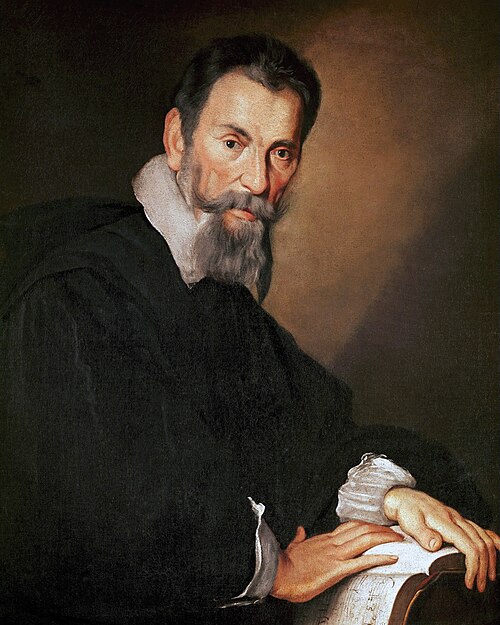
Monteverdi published the Vespro della Beata Vergine in Venice in 1610 with a dedication to the Pope, and it reads a good deal like a job application - he was stuck at Mantua, underpaid and resentful, and within three years he had the best musical post in Italy at St Mark's.
The music is a demonstration of everything he could do at once. He had spent years defending a new style against critics who thought his dissonances were simply mistakes, and his answer was that the old rules made music the master of the words, while the new practice made the words the master of the music. In the Vespers he does not choose between them: the old strict polyphony sits next to virtuoso solo writing, echo effects bouncing between voices, and instrumental sections in the manner of the new theatre music - and underneath almost every movement the traditional plainchant is still grinding away as the foundation.
Whether it is a single work at all is still argued. Nothing says these pieces were meant to be performed as one service, the instrumental forces are not fully specified, and some of the movements do not fit any obvious liturgy. Performers have to make decisions the composer left open, which is one reason no two recordings agree and why the piece has stayed alive rather than settling into a fixed shape.