Geography
Which pigment made from crushed sea snails clothed Roman emperors?
- Tyrian purple
- Ultramarine
- Vermilion
The answer is Tyrian purple. Thousands of murex per gram.
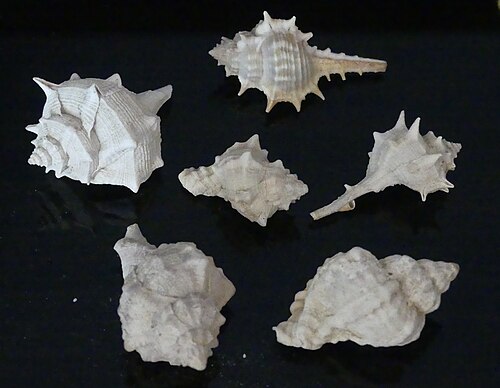
Tyrian purple came out of a gland in the body of murex sea snails, harvested in enormous numbers around Tyre and Sidon. The secretion is colourless when extracted; it turns yellow, then green, then finally purple on exposure to air and light, which means the dyer is working blind and watching a chemical reaction happen on the cloth.
The economics were absurd. Estimates run to something like ten thousand snails for a single gram of dye, and the mounds of discarded shells outside the Phoenician cities were large enough to be landmarks. Weight for weight it cost more than gold. Roman sumptuary law progressively restricted who could wear it until, by the later empire, a full purple garment was an imperial monopoly and putting one on was close to declaring yourself emperor. The Byzantine phrase born in the purple comes from the porphyry-lined chamber where an reigning emperor's children were delivered.
The chemistry is the joke at the end. Tyrian purple is 6,6'-dibromoindigo - which is to say it is indigo, the dye in a pair of jeans, with two bromine atoms attached. The most exclusive substance in the ancient world and the most democratic one in the modern are near neighbours. Production collapsed with the fall of Constantinople in 1453 and the technique had to be reconstructed from scratch centuries later.