Geography
Which African city was the scholarly heart of the Songhai Empire?
- Timbuktu
- Gao
- Djenne
The answer is Timbuktu. Its manuscripts survive today.
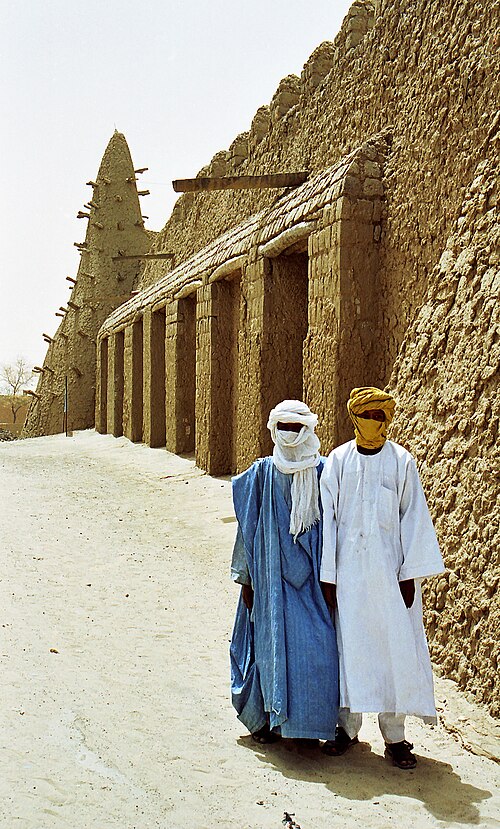
Timbuktu sits where the Niger comes closest to the Sahara, which is the whole explanation: it is the point at which goods coming upriver by boat transfer to camels, and vice versa. Salt came south, gold went north, and the city took a cut of both. Under the Songhai empire in the fifteenth and sixteenth centuries it turned that wealth into scholarship.
Teaching ran through the mosques of Sankore, Djinguereber and Sidi Yahya and through the households of individual scholars, covering law, theology, astronomy, mathematics and medicine. Books were the point. Leo Africanus, visiting in the 1500s, reported that manuscripts brought from the Barbary coast were the most profitable merchandise in the city, and families accumulated private libraries that stayed in the family for centuries.
The scholarly city ended abruptly in 1591, when a Moroccan army crossed the desert with firearms, broke the Songhai, and deported the leading scholars - among them Ahmad Baba, who wrote about the loss of his library of 1,600 volumes. Europe adopted the name as a byword for the ends of the earth at almost exactly the moment the place stopped mattering.
The manuscripts survived, which is the good part. When jihadist groups occupied the city in 2012 and began destroying shrines, librarians led by Abdel Kader Haidara packed something like 350,000 manuscripts into footlockers and moved them out by donkey, canoe and car to Bamako. The destruction of the mausoleums produced the first conviction at the International Criminal Court for the destruction of cultural heritage.