Geography
Which ancient city's Ishtar Gate glazed lions now stand in Berlin?
- Babylon
- Nineveh
- Persepolis
The answer is Babylon. The gate rebuilt in museum halls.
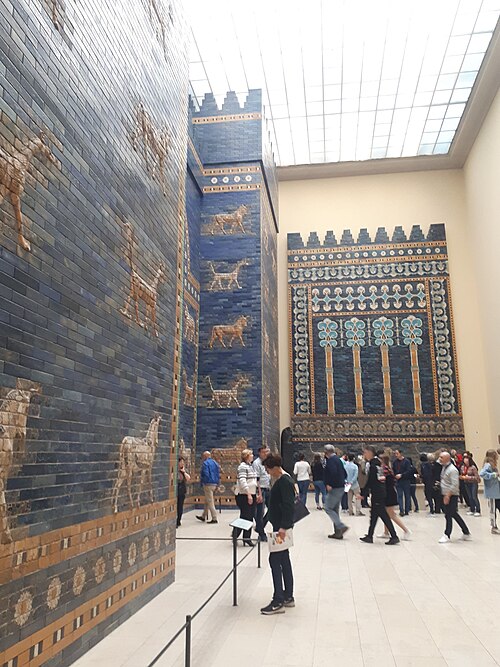
Nebuchadnezzar II built the Ishtar Gate at Babylon around 575 BC, faced in glazed brick of a deep lapis blue with rows of animals modelled in relief: dragons sacred to Marduk and bulls sacred to Adad on the gate, and sixty striding lions along the Processional Way that approached it. It was for a time counted among the wonders of the world, before the list settled down and dropped it in favour of the lighthouse at Alexandria.
Robert Koldewey excavated Babylon for the German Oriental Society from 1899, and the glazed bricks went to Berlin in crates - tens of thousands of fragments, reassembled through the 1920s and 30s into the reconstruction that stands in the Pergamon Museum. What is on display is the smaller frontal gate; the larger one behind it was too big for the building and is still in storage.
The bricks have been contested ever since. Iraq has asked for them back, and the counter-argument that they were exported legally under Ottoman-era permits does not settle the question so much as restate it. Meanwhile the site itself has had a hard century: Saddam Hussein rebuilt parts of the city in the 1980s using bricks stamped with his own name in imitation of Nebuchadnezzar, and coalition forces built a base across the ruins in 2003, digging revetments through archaeology and cracking pavement with helicopter downwash.