General Knowledge
Who deciphered Babylonian cuneiform using the Behistun inscription?
- Henry Rawlinson
- Jean-Francois Champollion
- Arthur Evans
The answer is Henry Rawlinson. Rawlinson, copying the cliff carvings at great risk.
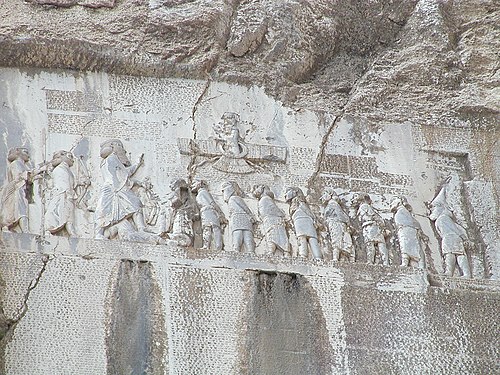
The Behistun inscription is cut into a limestone cliff in western Iran, about a hundred metres above the old road, and was carved for Darius I around 520 BC to explain how he had come to the throne. Crucially, it says the same thing three times: in Old Persian, in Elamite and in Babylonian. That makes it the Rosetta Stone of cuneiform, with the inconvenience that it is on the side of a mountain.
Henry Rawlinson, an officer with the East India Company, began copying it in 1835 and returned to it for years, working from ladders propped on a narrow ledge and swinging on ropes to reach the panels. The Babylonian text was on the least accessible face; he eventually got squeezes of it with the help of a local Kurdish boy who crossed the rock face where Rawlinson could not. He published the Old Persian in 1846 and had largely broken the Babylonian by 1851.
He is the name attached to it, though Edward Hincks and Jules Oppert did a great deal of the work and are owed more than they usually get. The field settled the question of whether any of it was real in 1857, with an experiment: four scholars were given the same previously unread inscription and sealed their translations separately. The versions matched. Assyriology has treated that afternoon as its founding moment ever since, and it remains a rather good way of proving you have actually understood something.